
Best Non-Greasy Sunscreen Stick for Oily, Active Skin
For oily or breakout-prone skin that sweats, the best non-greasy sunscreen stick passes three label checks: broad-spectrum SPF 30 or higher with a printed 40 or 80 minute water-resistance window, the words "non-comedogenic" or "won't clog pores" if breakouts are your problem, and a clear finish light enough that you will actually reapply it. Sweat mixing with skin oil can clog pores on acne-prone skin, so the formula you pick matters more than how hard you try to tolerate it. Our HAESKN Sunscreen Stick SPF 50 meets the first and third checks, and we explain below how to weigh the second.
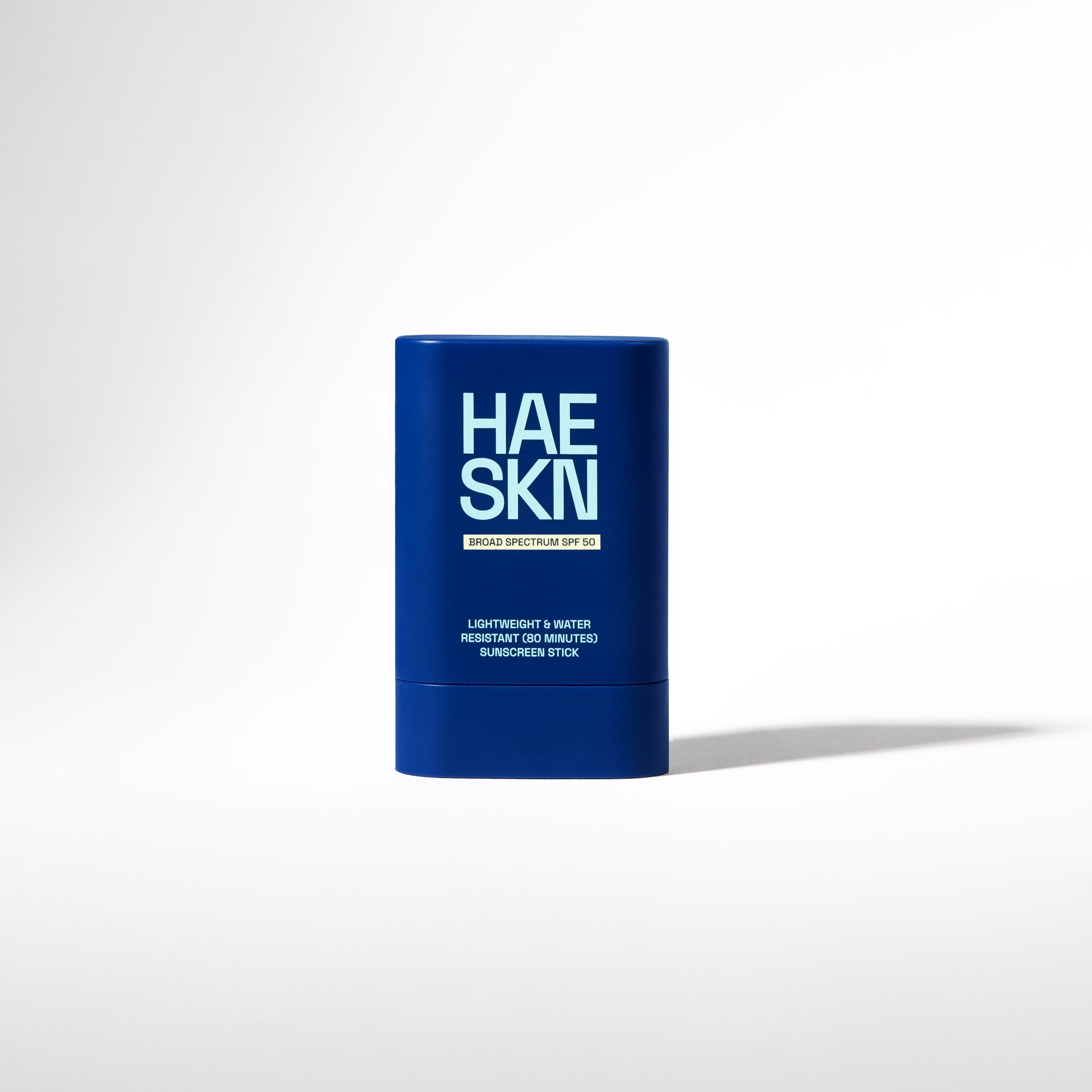
We make an SPF 50 stick for runners, hikers, surfers and court players. This guide is for active people whose greasy-sunscreen problem is oily or breakout-prone skin that sweats hard. If you want a side-by-side ranking of specific sticks instead, our non-greasy sunscreen stick ranking covers that.
Why sunscreen turns greasy once you start sweating
Sweat is the trigger. The American Academy of Dermatology explains that when sweat mixes with bacteria and oils on your skin, it can clog your pores, and that on acne-prone skin this often means breakouts. A heavy sunscreen film sits in that same mix.
Gear makes it worse. A literature review of acne in athletes published on ScienceDirect identifies friction, occlusion and sweat as factors that can contribute to acne in athletic populations, overlapping with acne mechanica from equipment. Headbands, visors, helmet pads and cap brims all press sweat and product against the same strip of forehead for hours.
That is the setting a sport sunscreen has to work in, so choose a formula built for it.
The three label checks that decide it
The label settles most of the decision before you ever swipe. Here is what to look for, in order.
| Check | What the label should say | Why it matters for active, oily skin |
|---|---|---|
| Protection that survives sweat | Broad Spectrum SPF 30+ and "Water Resistant (40 minutes)" or "(80 minutes)" | The AAD recommends sticks that are broad-spectrum, water-resistant and SPF 30+ |
| Pore-friendly claim | "Non-comedogenic" or "won't clog pores" | The AAD's specific criterion for oily and acne-prone skin |
| Clear, light finish | Clear or tinted; no visible residue on your skin tone | A film you dislike is a film you skip reapplying |
1. Broad-spectrum SPF 30+ with a printed water-resistance window. The AAD advises choosing sticks that are broad-spectrum, water-resistant, and SPF 30 or higher. The FDA allows only two water-resistance claims, 40 or 80 minutes of swimming or sweating based on standard testing, and it bars the words "waterproof" and "sweatproof" because they overstate effectiveness, according to the agency's sunscreen Q&A. A printed minute count is the only sweat claim on a US label that comes from a required test.
2. "Non-comedogenic" or "won't clog pores" if you break out. For both oily and acne-prone skin, the AAD tells you to look for the words "non-comedogenic" or "won't clog pores". In its acne guidance, the AAD says products with that label don't cause breakouts in most people. Note the scope: most people. The AAD's acne management advice puts both checks together, recommending a broad-spectrum, water-resistant SPF 30+ sunscreen that says "non-comedogenic" or "won't clog pores" for skin not covered by clothing outdoors.
3. A clear finish on your skin tone. The AAD suggests that people with darker skin tones use a tinted sunscreen to prevent a white residue. A clear formula without white mineral pigment is the other route to the same result. We break down both routes in which sunscreens really have no white cast on brown skin.
Where the HAESKN Sunscreen Stick SPF 50 fits
Our stick is built for the first and third checks. It is SPF 50 broad spectrum, and our product page lists it as 80-minute water and sweat resistant, which is the higher of the two FDA windows. Confirm the window on the Drug Facts panel of the pack in your hand, as you should with any sunscreen.
The finish is clear because the filters are four FDA-approved organic filters: avobenzone, homosalate, octisalate and octocrylene. There is no zinc oxide or titanium dioxide, so there is no white pigment to go ashy on brown, dark or deep skin. The texture is lightweight, shaped by K-beauty finish standards, and the formula includes ginseng, ceramides and rice extract. The pocket-sized stick is easy to carry for top-ups. It is made in the US as an FDA-compliant OTC drug and listed at $24.
On the second check, be clear-eyed. We don't make a non-comedogenic claim for this stick. If breakouts are your main concern, the AAD's criterion is that label, and you should weigh it against finish and water resistance for your own skin. If your priority is a clear, light SPF 50 rated for 80 minutes of water and sweat that doesn't show on deeper skin, this stick is built for exactly that.
HAESKN Sunscreen Stick SPF 50
24.00 USD
Shop now

HAESKN SOLCHECK
15.00 USD
Shop now
How to keep any stick from going slick mid-session
Application technique matters as much as the label. These steps come from AAD and FDA guidance.
- Build the layer, then rub it in. The AAD recommends four passes back and forth over each area, then rubbing it in for an even layer.
- Blot sweat, don't wipe it. The AAD recommends blotting sweat with a clean towel or cloth, because wiping can irritate skin and lead to breakouts.
- Reapply on the label's clock. The FDA directs reapplying at least every two hours, and more often after swimming or sweating according to the label, even for water-resistant sunscreens, per its sunscreen Q&A. Our guide to reapplying sunscreen when you're sweating turns that into a session plan.
- Wash what touches your face. The AAD advises washing sweaty headbands, towels and hats before wearing them again.
If you lose track of time outdoors, our SOLCHECK UV sticker gives you a visual cue: its logo darkens as UV gets stronger, and a pack holds 24 stickers for $15. It shows UV intensity. Your label still sets the reapplication timing.
FAQ
Is a mineral stick better if I'm acne-prone?
The AAD's acne-specific criterion is the "non-comedogenic" or "won't clog pores" label, not the filter type. The AAD does recommend sunscreens containing only zinc oxide and titanium dioxide if your skin stings or burns when you apply sunscreen. On darker skin, weigh that against the white residue the AAD suggests tinted formulas to prevent.
I use a retinoid for acne. What should I look for?
While using a retinoid, the AAD advises seeking shade, wearing sun-protective clothing, and applying a non-comedogenic sunscreen with broad-spectrum protection, SPF 30 or higher, and water resistance to all skin not covered by clothing. That is the same three-check list above, with the pore-friendly label made non-optional.
Does "sweatproof" on a pack mean it won't slide off?
US sunscreen labels can't say "sweatproof." The FDA bars the term because it overstates effectiveness. Look for "Water Resistant (40 minutes)" or "(80 minutes)" instead, and reapply once that time of sweating has passed.
Choose by your deciding check
Start with the check that matters most for your skin. If breakouts decide it, put the non-comedogenic label first. If a clear finish on deeper skin and 80 minutes of water resistance decide it, try the HAESKN Sunscreen Stick SPF 50 on your next long session.