
Best Sunscreen for Dark Skin on the Padel Court
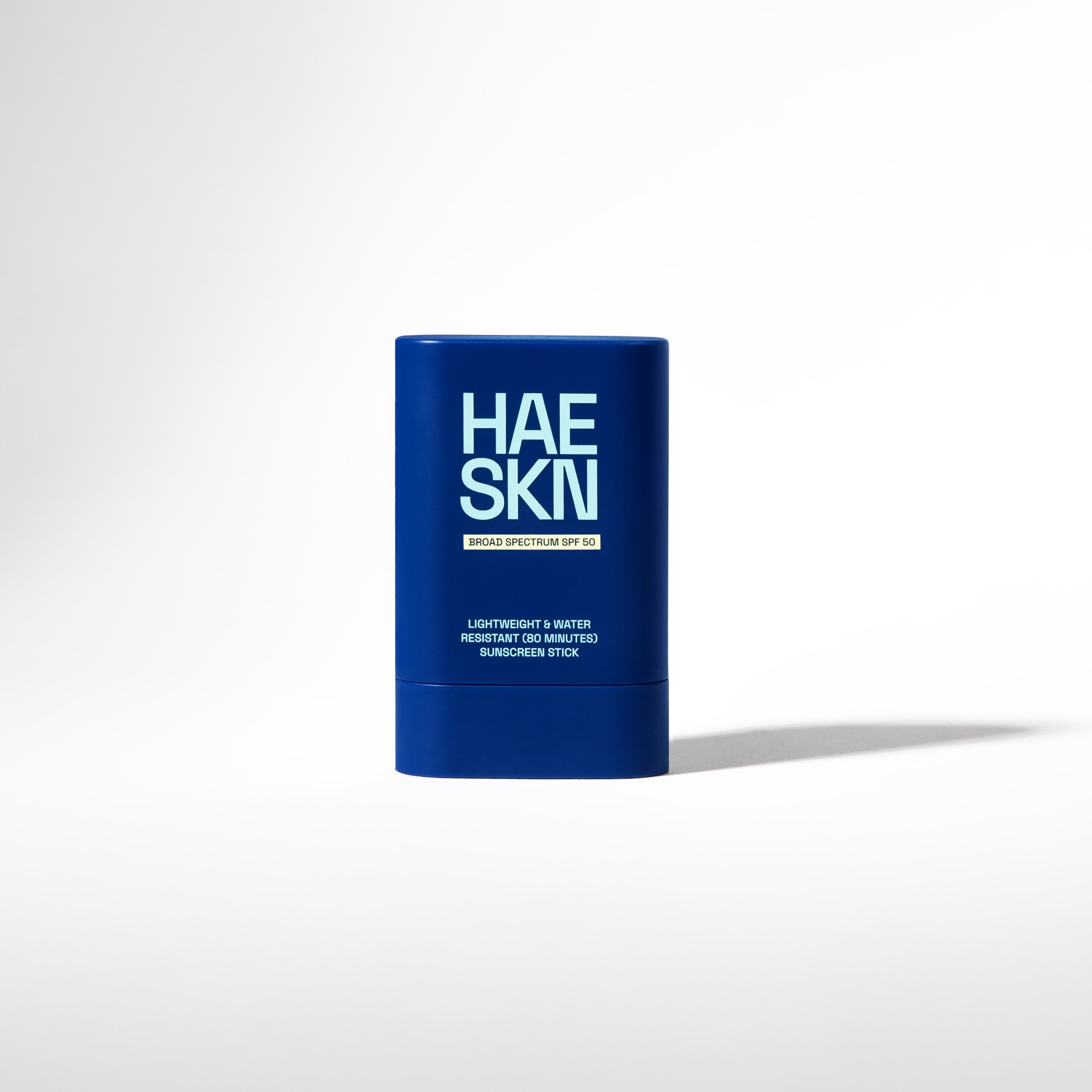
For padel on deeper skin, the best choice is a clear-finish SPF 50 you can reapply one-handed at a changeover, with a tinted iron-oxide sunscreen as your morning base layer when hyperpigmentation is the concern you care most about. Each of those solves a separate problem: UV protection you will actually top up mid-match, and visible-light pigment protection that only a tinted formula delivers. HAESKN publishes this guide and sells the HAESKN Sunscreen Stick SPF 50, and the section below names the part of this problem our stick does not solve.
An outdoor padel court is a demanding place to keep sunscreen on your face. Club matches run 60 to 90 minutes across two or three sets, and the official pauses are short: PadelFans puts changeovers at 90 seconds and the break between sets at two minutes. That is your entire reapplication window, and you will be using it while holding a racket and a towel.
For players with brown, dark, or deep skin, a second problem stacks on top. Most of the sunscreens marketed as "sport" or "sensitive" leave a grey or chalky film that is visible from across the court, so they get skipped. A product you own and do not wear protects nothing.
What decides the choice on a padel court
Five criteria, in the order we weight them for this specific situation:
- Finish on your actual skin tone. If it reads ashy, compliance collapses and nothing else on this list matters.
- One-handed reapplication. A format you can run over a sweaty face during a 90-second changeover without a mirror or clean hands.
- A printed water-resistance window. Either 40 or 80 minutes, stated on the front of the pack.
- Broad-spectrum SPF 30 or higher. The American Academy of Dermatology recommends SPF 30 or higher, water resistant, broad spectrum as the baseline for everyone.
- Visible-light protection, if pigmentation is your main worry. This one is answered by tint, not by SPF.
Why mineral filters look ashy on melanated skin
The white cast is an optics problem. Zinc oxide and titanium dioxide particles sit on the surface of the skin and scatter visible light in every direction. Against a light complexion the scatter disappears into the background. Against deeper skin it fights the melanin underneath and reads grey, purple, or chalky, which is why a formula can look acceptable in the tube and terrible in a court-side selfie.
Micronized zinc reduces the effect without removing it. Higher zinc loads make it worse.
Clear organic filters avoid the problem at its source because there are no opaque particles to scatter light. That is the formulation route HAESKN took: our stick uses four FDA-permitted organic filters, avobenzone, homosalate, octisalate and octocrylene, with no zinc oxide and no titanium dioxide, which is the reason it dries down clear on deep tones. Organic filters need lead time, so put the first layer on before you leave for the club rather than at the net. The AAD advises applying about 15 minutes before going outdoors so the film has time to set.
If you want the longer version of the finish argument, we wrote it up in Best Sunscreens for Brown Skin With No White Cast.
The gap a clear stick does not fill
A clear sunscreen leaves one exposure route open, and on deeper skin it is the route that does the most cosmetic damage over a season.
SPF measures UVB, and broad-spectrum testing adds UVA. Neither number says anything about visible light, which the review published in Dermatology Times describes as roughly 45% of sunlight, with the blue-violet portion driving long-lasting hyperpigmentation in people at Fitzpatrick skin type III and above. The AAD makes the same point in its Sunscreen FAQs: visible light can increase skin darkening, particularly for people with darker skin tones.
What blocks visible light is pigment. In a 2020 study in the Journal of Drugs in Dermatology, iron-oxide containing formulations significantly protected Fitzpatrick IV skin against visible light-induced pigmentation whereas a non-tinted mineral SPF 50+ sunscreen showed no comparable benefit in that comparison. A 2026 literature review and product analysis in the same journal reached a similar conclusion across the clinical literature, and reported that in one melasma study a sunscreen with added visible-light protection cut Melasma Area and Severity Index scores further than a UV-only product, 75% versus 60%.
Read that review's second finding too, because it applies to every tinted product on the shelf including the ones you might buy instead of ours: of the 37 tinted sunscreens the authors analyzed, the iron oxide content was largely undisclosed, and there is no standardised visible-light protection metric to compare them on. The direction of the evidence is solid. The dose on any given label is not knowable from the label.
So: a clear sunscreen, ours included, does not carry the pigment that protects against visible light. If you have melasma, post-inflammatory marks from acne or razor bumps, or dark spots you are actively trying to fade, a tinted iron-oxide sunscreen should be your base layer in the morning. That choice is about pigmentation management, and the trade is that most tinted formulas transfer onto a towel and are difficult to reapply neatly mid-match.
Reading the water-resistance window before you buy
Only two claims are legal on a US sunscreen label: Water Resistant (40 minutes) or Water Resistant (80 minutes), specified in 21 CFR 201.327. "Waterproof" and "sweatproof" were removed from US labels by the FDA's 2011 rule.
The number is narrower than it sounds. Under the FDA's compliance guide, the 40-minute claim comes from two 20-minute water-immersion cycles with drying periods in between, and the 80-minute claim repeats that sequence for four cycles. The test subjects are never toweled. Padel gives you friction from a headband, a sleeve, a towel at every changeover, and none of that is in the protocol.
Two practical consequences for a 90-minute match:
- The clock counts time spent sweating heavily or in water, not time since you applied. We unpack that timing in Why Water-Resistant Sunscreen Says 40 or 80 Minutes.
- Toweling ends the window early whatever the number says. The AAD's instruction is to reapply every two hours outdoors and immediately after sweating, and that "immediately" is the line that matters on a court.
Check the printed window on whatever stick you buy, ours included, and treat it as the outer bound rather than the plan.
Where the HAESKN stick fits
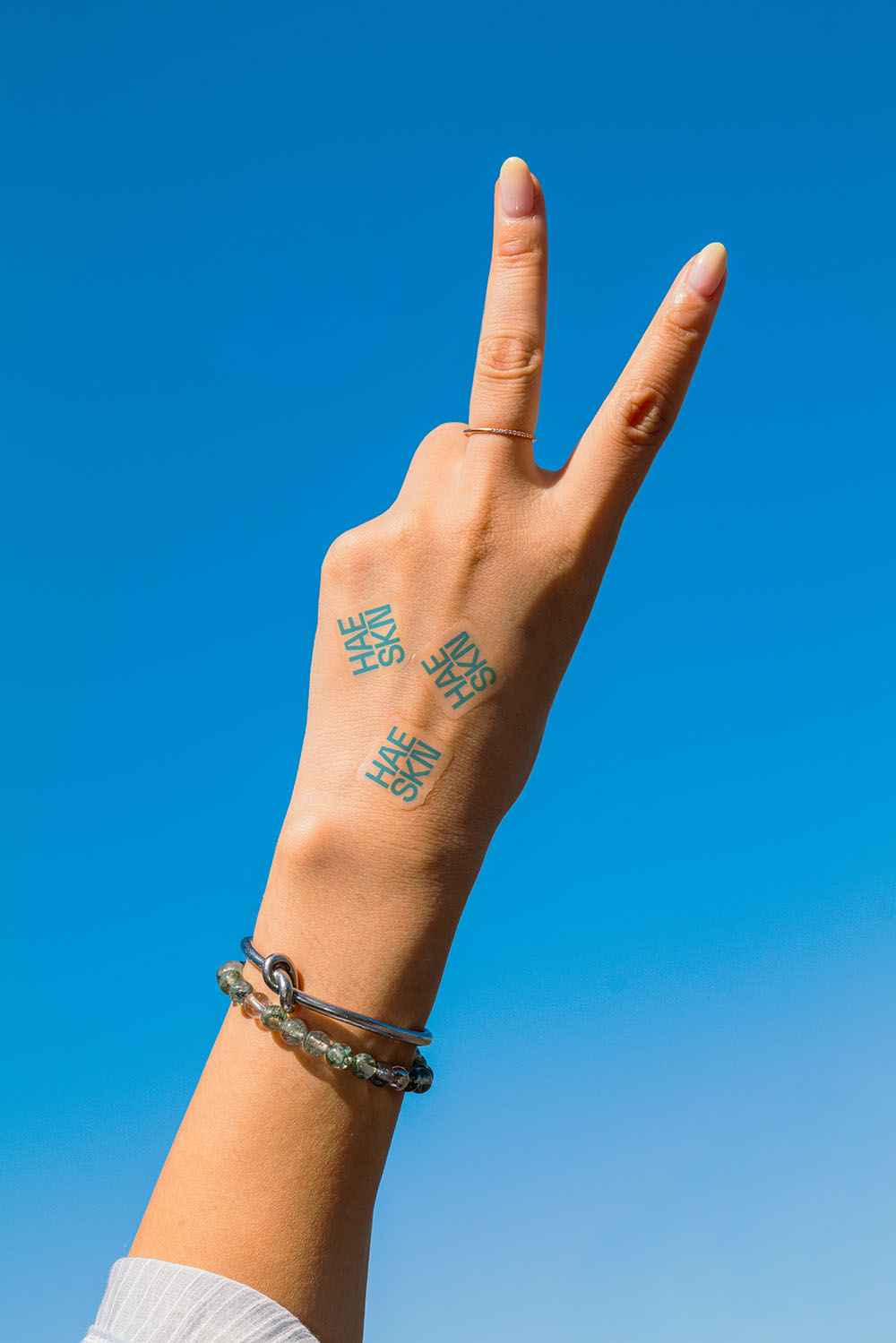
We designed the SPF 50 stick around the reapplication moment rather than the lab number. It is pocket-sized, it runs one-handed over a damp face, the finish stays clear on deep tones, and it is manufactured in the US as an FDA-compliant OTC drug at $24. Our $15 SOLCHECK UV sticker is the companion for judging how punishing the session actually is before you decide how often to top up.
What we do not claim: we are not a tinted sunscreen and we do not add iron oxides, so we do not address visible-light pigmentation. We also make no dermatologist-tested, non-comedogenic, sensitive-skin, eye-safe or reef-safe claim, because we do not hold product-specific evidence for those and we would rather say so than imply it. Players who mainly want pigment control should pair a tinted base with a clear stick for reapplication. Players whose problem is that sunscreen gets skipped after set one are the players our format was built for.
HAESKN Sunscreen Stick SPF 50
24.00 USD
Shop now
HAESKN SOLCHECK
15.00 USD
Shop now
A padel-day routine that survives three sets
- Fifteen minutes before you leave. Full-face layer, enough to cover face, ears and neck evenly rather than a thin smear. Tinted iron-oxide formula if pigmentation is your priority, clear SPF 50 if finish and simplicity are.
- Warm-up. Add a pass over the high-exposure planes: nose bridge, cheekbones, ears, the back of the neck under a cap.
- Every changeover. Blot sweat first, then reapply. Product goes on skin, not on a sweat film, and 90 seconds is enough for two passes with a stick.
- Between sets. Two minutes covers a full face pass. This is the reapplication most players skip, and it lands at roughly the 45-minute mark of a 90-minute match.
- After the towel comes out. Reapply, regardless of what the clock says.
Sun protection on a court is not only a bottle decision. The AAD's guidance pairs sunscreen with shade and covered skin, and a cap plus UV-blocking eyewear removes work from the sunscreen on the parts of your face that sweat most.
FAQ
Do deeper skin tones need sunscreen for padel at all?
Yes. The AAD recommends broad-spectrum SPF 30 or higher for everyone, with no skin-tone exemption. The daily-stakes argument for deeper skin often centers on pigmentation rather than sunburn, since visible light can deepen existing dark marks.
Is chemical or mineral sunscreen better for a padel match on dark skin?
For finish, clear organic filters have the advantage, because there are no opaque mineral particles to scatter light and read grey. For visible-light pigmentation, a tinted formula wins whatever its filter system, since the protection comes from the iron oxides rather than from the UV filters.
Can I reapply over sweat, or do I need to start clean?
Blot first. Sunscreen has to reach skin to form a film, and a stick pushed across a wet face mostly redistributes sweat. A two-second pass with a towel before the stick is the whole technique.
Does SPF 50 let me skip a reapplication?
No. SPF describes protection per application, not duration. SPF 50 and SPF 30 run on the same reapplication schedule, and the higher number mainly buys margin against applying too thin.
Should I use a tinted sunscreen and a clear stick together?
That is a reasonable setup if hyperpigmentation is your main concern. Tinted base in the morning for visible-light coverage, clear stick in your bag for the changeover top-ups that a tinted formula makes messy. There is no published head-to-head trial of that pairing, so treat it as reasoned practice rather than proven protocol.
Ready to fix the reapplication half of the problem? The HAESKN Sunscreen Stick SPF 50 is $24 and fits in a padel bag pocket. If you want the court-side technique in more detail, read What's the Best Sunscreen to Reapply Between Padel Sets?