
Best Sunscreen for the NYC Half: A Race-Day SPF Guide
The best sunscreen for the NYC Half is a Broad Spectrum, water-resistant sunscreen that you will actually put on every patch of skin your race kit leaves exposed, and that you can carry with you once you leave gear check. Our pick for that job is a high-SPF stick with the longest water-resistance rating you can find on the label. That is why we built the HAESKN Sunscreen Stick SPF 50: Broad Spectrum SPF 50, Water Resistant (80 minutes), in a stick that fits in a pocket.
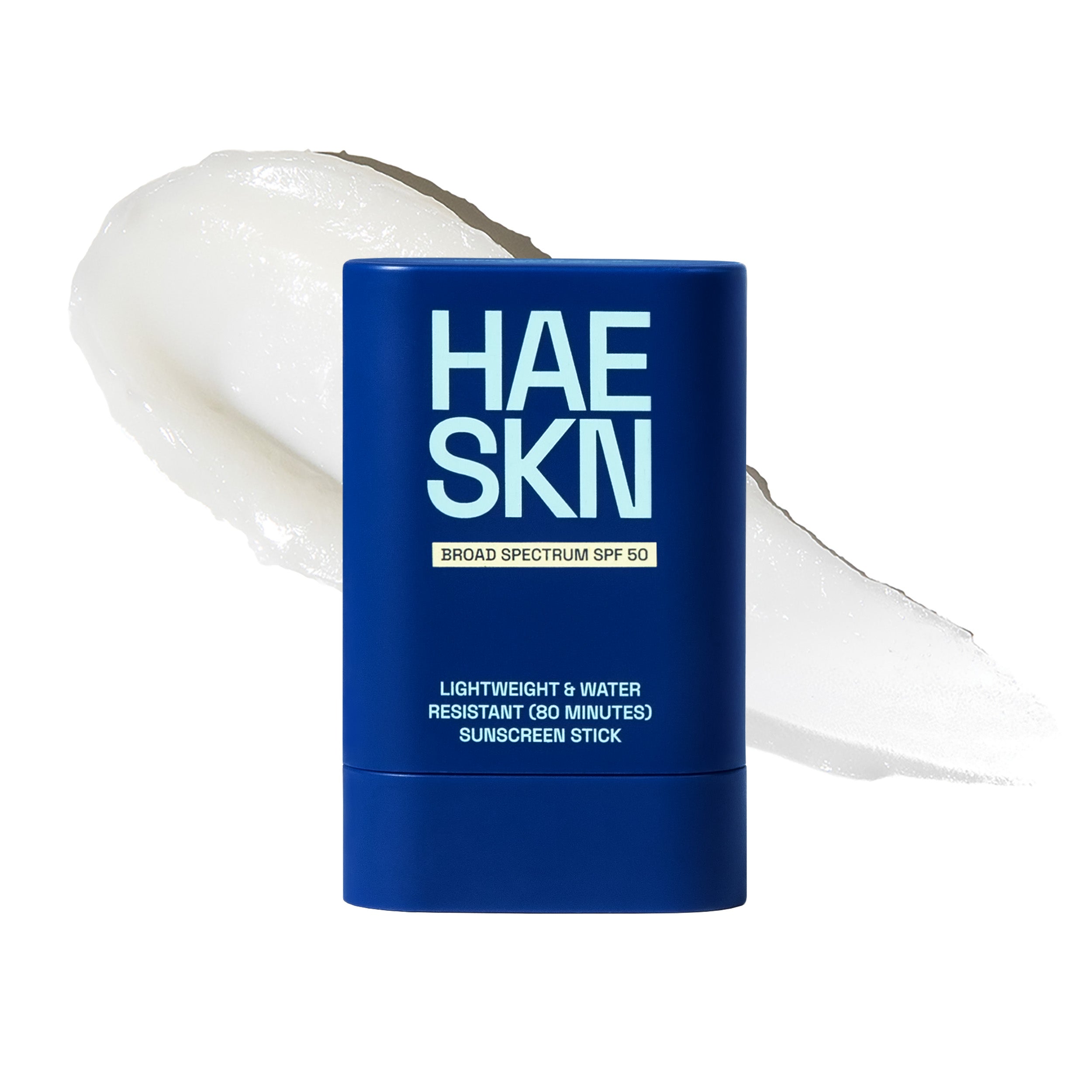
Below, we explain why a cool race morning in New York still calls for sunscreen, what to put on your shortlist, and where our stick fits and where it does not.
Why a cold race morning still needs sunscreen
Temperature does not measure UV. The sun can be strong enough to matter on a morning when you start in gloves.
Check the numbers for your race month. A MyWild analysis of NOAA Climate Prediction Center UV bulletins for New York (2015–2024) puts typical March midday UV at 3.4, with a highest reading of 6 over that decade, and finds that typical midday UV in New York sits at 3 or higher from March through October. The same page quotes the World Health Organization's threshold: "Sun protection is recommended when the ultraviolet index is 3 and above."
Clouds do not cancel the decision either. The page quotes EPA's guide to the UV index: "Sunburn is possible on a cloudy day. Up to 80% of solar UV radiation can penetrate light cloud cover." For the moderate range (3–5), EPA's message is to take precautions, "such as covering up and using sunscreen, if you will be outside."
UV builds through the day toward a peak around solar noon, per the same MyWild page. Add the time you spend waiting before the start and walking out after the finish, and race day is a full morning outdoors, not just the minutes on the clock.
The NYC Half sunscreen shortlist
Here is what we would look for, and why each point matters on race day.
| Criterion | What to look for | Why it matters on race day |
|---|---|---|
| Broad Spectrum | "Broad Spectrum" next to the SPF on the label | Protection against both UVA and UVB, not just burn-causing UVB |
| SPF | A high number, such as SPF 50 | Gives you more headroom on a long morning outdoors |
| Water resistance | Minutes printed on the label, ideally 80 | A half marathon is a long, sustained sweat effort |
| Format | Matches the skin your kit leaves exposed | A stick suits the face, ears and neck; large bare areas need more product |
| Carry | Fits a shorts pocket, belt or glove | Once you leave gear check, you only have what you carry |
If two sunscreens tie on everything else, take the one you like wearing. A sunscreen that feels heavy or messy is the one that stays in the bag.
Match the sunscreen to your race kit
Race-morning weather decides what you wear, and what you wear decides what you need to cover.
Tights, long sleeves, maybe gloves. Exposed skin shrinks to your face, ears, neck and maybe the backs of your hands. A stick makes it easy to target those spots, including the tops of the ears and the back of the neck.
Shorts and a singlet on a mild morning. Now your arms and legs are exposed too. Apply generously to every bare area. A stick works well on the face and neck; for legs and arms it takes several full passes, so start early.
Hat or visor. Useful extra cover, but a brim leaves your ears, the back of your neck and the lower half of your face open as the course changes direction. Keep sunscreen on those areas anyway.
Where the HAESKN Sunscreen Stick SPF 50 fits
We designed our stick around active outdoor routines, where the sunscreen has to come with you. Here is what it offers:
- Broad Spectrum SPF 50, protecting against UVA and UVB (product page).
- Water Resistant (80 minutes) on the label; the product page describes it as 80-minute sweat and water resistant.
- A 16.5 g stick that slips into a pocket or running belt.
- Four FDA-approved chemical filters: avobenzone, homosalate, octisalate and octocrylene. It goes on clear, with no white cast, on every skin tone.
- US-made, FDA-compliant OTC sunscreen, $24 for one stick on haeskn.com.
HAESKN Sunscreen Stick SPF 50
24.00 USD
Shop now
Where it is not the right pick:
- You want mineral sunscreen. Our stick is chemical, not mineral. It contains no zinc oxide or titanium dioxide. If mineral filters are your requirement, choose a mineral product. Our mineral vs chemical guide explains the difference.
- You need full-body coverage fast. For bare legs and arms, a stick takes many passes. Use it for the face, ears, neck and hands, and give yourself extra time for the body.
- You need a sensitivity claim. We do not claim our stick is hypoallergenic, non-irritating or tested for sensitive skin. The label warns to keep it out of the eyes and to stop use and ask a doctor if a rash occurs. Try it on training runs before race day.
Race morning: a simple plan
- Test it in training. Use the same sunscreen on a long run before race day so nothing is new on race morning.
- Apply before you leave for the start. Do it indoors, before you head out, not in the corral with cold hands.
- Cover the forgotten spots. Ears, back of the neck, hairline and the backs of your hands.
- Pocket the stick. Our product page recommends reapplying every 2 hours, and water resistance on any label is rated for a set number of minutes. If your morning outdoors runs longer than that, reapply. For timing details, see our guide to reapplying sunscreen when you're sweating.
FAQ
Do I really need sunscreen if race morning is cold and cloudy?
Yes, if you will be outdoors for hours. According to the MyWild summary of NOAA bulletins, typical March midday UV in New York sits at 3.4, above the WHO's threshold of 3 for sun protection. The same source quotes EPA guidance that up to 80% of solar UV can get through light cloud.
Does a water-resistant sunscreen last the whole race?
Not automatically. Water resistance is rated for a set number of minutes, printed on the label. Ours reads Water Resistant (80 minutes). If your race morning runs longer than the rating, carry sunscreen and follow the label directions.
Is the HAESKN stick reef-safe?
We make no reef-safe claim. That matters more for a beach vacation than for a city road race.
Bottom line
For the NYC Half, choose a Broad Spectrum, water-resistant sunscreen and put it on every bit of skin your race kit leaves exposed. If you want a pocket-sized SPF 50 with an 80-minute water-resistance rating and a clear finish, the HAESKN Sunscreen Stick SPF 50 was built for mornings like this one. Test it on your next long run.