Best Sunscreen for Trail Running and Hiking, Ranked (2026)
Most trail sunscreen guides tell you to buy mineral. That advice ignores what actually happens on a climb: a chalky formula that looks fine at the trailhead turns into visible gray residue by mile six, and a runner who sees that residue in a photo is a runner who skips the next reapplication. On the trail, white cast is not a cosmetic footnote. It is a compliance failure, and compliance, not the SPF number on the label, is what determines whether you're actually protected four hours in.
This ranking weighs five formats against three trail-specific variables that generic "best sunscreen" lists skip: how the formula holds up as UV intensity climbs with elevation, how fast it degrades under sustained sweat, and whether its finish makes reapplication something you'll actually do mid-trail rather than skip.
Why Altitude Changes the Sunscreen Math
UV intensity does not stay flat as you climb. It increases by roughly 10 to 12% for every 1,000 meters of elevation gain, so a hiker at 3,000 meters is exposed to roughly 30 to 40% more UV radiation than the same person at sea level. Snow adds another layer: it can reflect up to 80% of UV radiation back up at exposed skin, effectively doubling exposure on alpine terrain.
That compounding effect changes what "enough SPF" means. At altitude, SPF 30 performs closer to SPF 15 at sea level, which is why mountain trail guidance treats SPF 50+ as the floor, not a premium tier, for any route above treeline.
Sweat adds a second, separate problem. FDA water-resistance ratings (40 or 80 minutes) are measured under controlled test conditions, not on a technical climb at elevation, where heat, grade, and pack straps push sweat rate well past a lab protocol. A formula rated "80-minute water resistant" on the bottle can fail faster than that on an actual ridge line.
The Ranking
Ranked by how each format performs against altitude UV, sweat degradation, and reapplication compliance, not by SPF number alone.
| Rank | Format | Best for | Weak point on trail |
|---|---|---|---|
| 1 | Mineral cream (zinc oxide/titanium dioxide) | Sensitive skin, short exposed scrambles | Visible white residue; slow to rub in with dusty or sweaty hands |
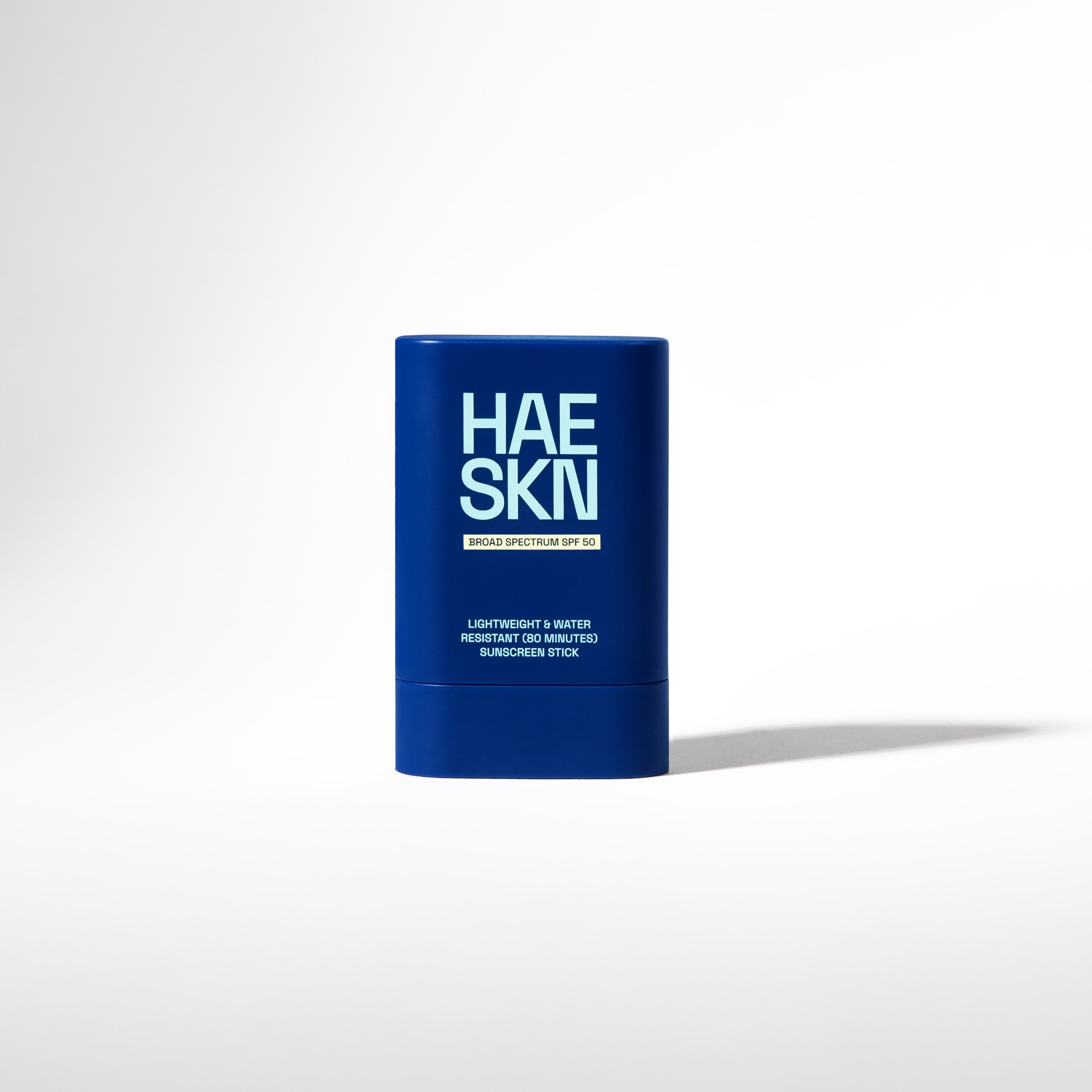
| 2 | HAESKN SPF 50 Sun Stick | Long climbs, one-handed mid-trail reapplication, deep skin tones | Chemical filters need roughly 20 minutes to reach full effect before sun exposure |
| 3 | Spray sunscreen | Fast pre-trailhead full-body coverage | Wind carries product off-target; commonly leaves gaps |
| 4 | Water-phase fluid sunscreen | Ultra racing, minimal-weight kit | Limited water-resistance duration under multi-hour sweat |
| 5 | Traditional lotion/cream (non-mineral) | Casual day hikes under 2 hours | Rubs onto pack straps and hands; awkward one-handed reapplication |
1. Mineral cream
Zinc oxide and titanium dioxide sit on top of the skin and block UV on contact, which is genuinely useful for short, high-intensity exposure like an exposed scramble. But the tradeoff is the one this entire ranking is built around: independent field testing across 12 mineral sunscreen sticks found all 12 left a visible white layer after 30 minutes of activity. On a multi-hour trail day, sweat and friction concentrate that residue at the hairline, jawline, and neck exactly where reapplication matters most, and exactly where a hiker is most likely to see it and decide not to reapply.
2. HAESKN SPF 50 Sun Stick
HAESKN's SPF 50 Sunscreen Stick uses FDA-approved chemical (organic) filters, formulated for a clear finish with no white cast across every skin tone, including deep tones. The stick format is deliberately built around the constraint that actually breaks compliance on a trail: one-handed application from a vest pocket without stopping, a mirror, or clean hands. That matters because spray sunscreen fails on the trail specifically due to wind carrying product off-course and users missing sections of the face without a mirror, which leaves the stick as the practical option for reapplying mid-climb.
The no-white-cast finish is not a purely cosmetic feature for this use case. UVA rays penetrate deeper into skin and can trigger post-inflammatory hyperpigmentation and melasma, and dark skin shows PIH more visibly after sweat and friction on a long climb. Mineral-first trail recommendations that ignore finish leave darker-skinned hikers and runners with a visible gray cast that mineral-first advice treats as an afterthought.
The honest tradeoff: chemical filters need about 20 minutes to bind before they reach full strength, so apply 15 to 20 minutes before you start climbing, not at the trailhead as you're lacing up.
3. Spray sunscreen
Sprays are fast for full-body coverage before a hike starts, which is a real advantage at the trailhead. Their trail-specific failure is application accuracy, not the formula itself: wind blows product off-target, and without a mirror, users routinely miss sections of the face and ears. Sprays consistently under-protect the back of the neck, the tops of the ears, and the hands, which are also the areas hikers most often under-apply in general.
4. Water-phase fluid sunscreen
Lightweight, fast-absorbing fluid sunscreens are popular in ultra racing because they weigh almost nothing and don't feel heavy under a heart rate. The tradeoff is durability against sustained sweat on a long climb, where the format's water-resistance window is often shorter than a cream or stick under the same exposure.
5. Traditional lotion/cream (non-mineral, non-stick)
Fine for a casual day hike under two hours where reapplication won't be needed. The weakness shows up on longer routes: a lotion that gets onto pack straps, hands, and hiking poles is awkward to reapply one-handed, and greasy residue on the palms means the next handhold on a scramble is slicker than it should be.
Three Things Every Trail Sunscreen Guide Should Check (and Most Don't)
Altitude-adjusted SPF. If your route gains more than 1,000 meters, treat SPF 30 as inadequate and plan for SPF 50+ from the start, not as an upgrade if conditions look intense.
Reapplication mechanics, not just water-resistance minutes. Ask whether you can actually reapply the formula with one hand, without stopping, without a mirror, and without clean skin. A formula that scores well on paper but fails this test won't get reapplied on the actual trail.
Finish across your own skin tone. A formula that tests clear on light skin in a lab photo may not test clear on deep skin tone after three hours of sweat and pack-strap friction. Test any new sunscreen on a short local trail before a big-day route, not on race morning.
FAQ
Does SPF 50 sunscreen actually matter more at altitude than at sea level?
Yes. UV intensity rises with elevation, and at altitude, SPF 30 behaves closer to SPF 15 to 20 at sea level, so a higher-SPF formula is compensating for a real physical effect, not just adding a marketing number.
Why does white cast matter if the sunscreen still blocks UV?
Because protection only works if you keep reapplying it, and a runner who sees gray residue in a trail photo is a runner who's more likely to skip the next application. A formula's UV block on paper doesn't matter if visible cast causes people to stop using it correctly partway through a route.
Is mineral sunscreen still a reasonable choice for hiking?
Yes, particularly for short exposed sections or sensitive skin, since mineral filters block UV immediately on contact rather than needing time to absorb. The tradeoff to plan around is visible residue after sweat, which field testing has shown across multiple mineral stick formulas.
How often should I reapply sunscreen on a long trail run or hike?
Plan on reapplying more often than the 40- or 80-minute label suggests once you're sweating heavily at elevation, since those ratings come from controlled lab conditions rather than a multi-hour climb. Reapplying at natural stopping points, water breaks, or elevation transitions is a more reliable cue than watching a clock.
Do I need extra sun protection on a cloudy or overcast trail day?
Yes. Cloud cover blocks only a portion of UV radiation, and altitude and reflective terrain such as snow, light rock, or water continue to add exposure regardless of visible sun, so skipping sunscreen on an overcast climb still leaves skin under-protected.
If you're planning reapplication logistics for a specific effort, our guide on reapplying sunscreen during a long run without stopping breaks down the one-handed mid-run technique in more detail, our marathon training sunscreen stick comparison covers how the same field test held up across a full training block, and our broader guide to sun protection for hikers and trail runners covers route-level planning beyond the sunscreen format itself. For the trail itself, the HAESKN SPF 50 Sunscreen Stick is built for exactly this one-handed, no-mirror reapplication problem.