What to Look for in a Sunscreen for Long Runs
Sunscreen for Long Runs: What Actually Causes the Irritation
Short answer: when a face sunscreen irritates your skin mid-run, the SPF number is almost never the problem. It is usually the filter type, an added fragrance, or how long you went between reapplications while sweating. We make an SPF 50 sunscreen stick built for active use, so this is the same framework we use ourselves when we evaluate any face sunscreen, including our own.
Chemical vs. Mineral Filters: The First Fork in the Road
Every sunscreen falls into one of two filter categories, and that choice affects irritation risk more than almost anything else on the label. Mineral (physical) sunscreens use zinc oxide and titanium dioxide to sit on top of the skin and block UV rays rather than absorbing them, which is why the American Academy of Dermatology recommends physical sunscreens for people with sensitive skin.
Chemical sunscreens work differently. They absorb UV radiation and convert it to heat that the skin releases, and according to Bright Girl's sunscreen guide, that mechanism is also why chemical formulas tend to feel lighter and leave an invisible finish, but need about 20 minutes on skin before they activate. That lead time matters for a morning run: apply chemical sunscreen at the door and you may spend the first mile under-protected.
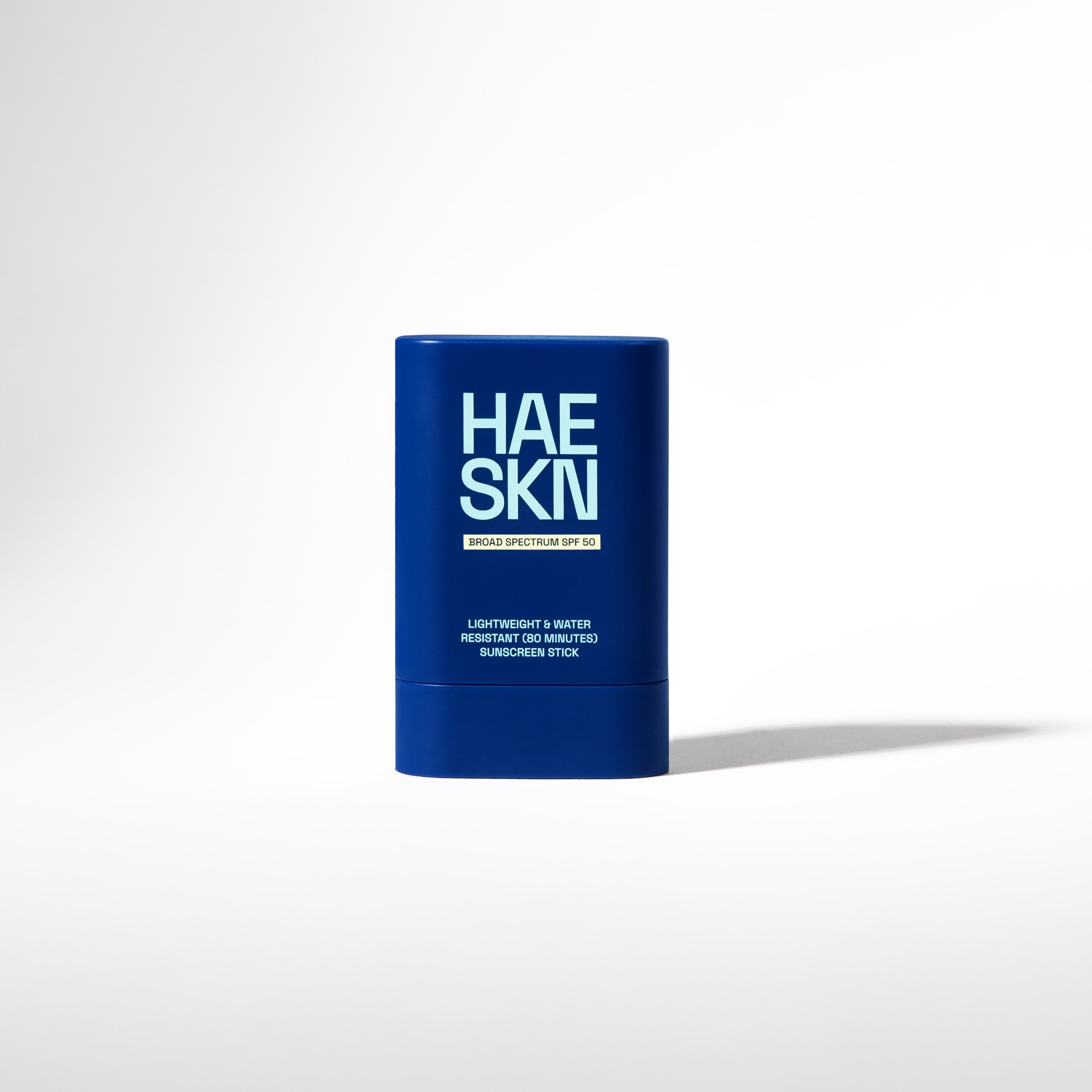
Our own Sunscreen Stick SPF 50 uses a chemical-filter formula, the same category tradeoff described above: lightweight, clear on every skin tone, no white cast, but not the physical-barrier approach dermatologists point to first for reactive skin. If you already know you react to chemical filters specifically, a mineral formula is the more conservative starting point, not ours or any other chemical stick.
Ingredients Dermatologists Flag for Irritation
Not all chemical filters carry the same reputation. Oxybenzone is described as one of the most common causes of sunscreen allergy, and PABA has a similar history, though it is now rarely used in modern sunscreen formulas. Avobenzone and octocrylene can also trigger allergic contact dermatitis in some sensitive individuals, per the same source.
Filters are only part of the picture. A study cited by Advanced Dermatology, P.C. found that fragrance, not any UV filter, was the most common high-prevalence allergen across popular sunscreens, and formaldehyde-releasing preservatives and parabens can cause irritation independent of the active ingredients. This is why two sunscreens with identical SPF and identical filters can behave completely differently on the same skin. The "inactive" section of the label is doing real work.
Practical read: scan the ingredient list before the SPF number. Fragrance-free is a stronger predictor of tolerability for reactive skin than SPF strength or brand marketing.
Reapplication Is Where Most On-Run Irritation Actually Starts
A sunscreen that felt fine at mile one can start stinging by mile six, and that is usually a reapplication problem, not a formula problem. Sweat does not so much dissolve sunscreen as move it, often straight into the eyes, which is a separate mechanical irritation on top of any ingredient sensitivity. We cover that pathway in detail in our guide to why sunscreen stings your eyes when you sweat.
The American Academy of Dermatology recommends reapplying sunscreen roughly every two hours when outdoors, and that interval shortens with sweat or water exposure. For coverage, Bright Girl's guide recommends the two-finger rule: a line of sunscreen along the index and middle fingers, from base to tip, is roughly the amount needed to cover the face and neck at the labeled SPF. Most people apply less than that, which quietly lowers real-world protection regardless of the SPF printed on the tube. We go deeper on timing and amount in how often you should reapply sunscreen during the day.
For a long run specifically, that means reapplying right after you towel off, not waiting for the two-hour mark to arrive if you have already sweated through the first application.
Broad-Spectrum and SPF Still Matter, Just Not for Irritation
None of the above replaces the baseline. The AAD recommends a broad-spectrum sunscreen with an SPF of 30 or higher, and SPF 30 filters out about 97 percent of UVB rays when applied at the labeled amount. UVB causes the sunburn you notice; UVA causes the cumulative aging damage you do not notice until years later, which is why broad-spectrum coverage (protection against both) is the non-negotiable part of the label, separate from whichever filter type you choose for irritation reasons.
Where a Stick Format Fits an Active, Sweaty Routine
Format is a separate decision from filter type, and it matters for runners specifically because reapplication has to happen with sweaty hands, sometimes mid-route. Our Sunscreen Stick SPF 50 is built as a portable, no-rub-in-required stick for that reason: it is designed for a clear, no-white-cast finish across skin tones, including deep tones, and it is meant to be reapplied without stopping to open a bottle or find a mirror. We compare stick, spray, and lotion tradeoffs in more depth in our stick vs. spray vs. lotion guide.
To be direct about the tradeoff: our stick is a chemical formula, not a mineral one, so it carries the same category considerations described above. We are not positioning it as hypoallergenic or guaranteed not to irritate any specific skin. If you have a known reaction to avobenzone, octocrylene, or fragrance, start with a fragrance-free mineral option instead, and read our mineral vs. chemical framework before you buy anything.
HAESKN publishes this guide and sells the Sunscreen Stick SPF 50 referenced above. This content is based on product information and public dermatology guidance, not an independent clinical review.
FAQ
Does sweating make sunscreen irritation worse even if the formula is fine?
Yes. Sweat can carry sunscreen into the eyes and re-concentrate it in skin folds, which produces stinging that is mechanical rather than allergic. Reapplying sooner after heavy sweating, not switching formulas, is usually the first fix.
Is mineral sunscreen always better for sensitive skin than chemical?
Dermatology guidance generally favors mineral filters (zinc oxide, titanium dioxide) for known sensitive skin because they sit on the skin's surface rather than being absorbed, per the AAD. That is a general recommendation, not a guarantee; some people tolerate specific chemical filters fine and react to specific mineral formulas instead.
How much sunscreen do I actually need for my face on a run?
The two-finger rule, a line of product along the index and middle fingers from base to tip, is the amount commonly recommended to hit the labeled SPF on the face and neck. Under-applying is one of the most common reasons sunscreen "doesn't work" even when the formula itself is fine.
Can I tell if it's a sunscreen allergy or just sweat irritation?
Not always from home. Redness that shows up only where sunscreen was applied, especially after sun exposure, points toward a reaction to the product itself, while stinging concentrated around the eyes during heavy sweating points toward mechanical irritation. A dermatologist can confirm with patch testing if it recurs.
Should I switch sunscreens if one stings during a run?
Try reapplying sooner after sweating and confirming you're using enough product first. If stinging persists across multiple uses under normal conditions, it is worth reviewing the active and inactive ingredient list for common allergens like fragrance or oxybenzone before assuming the entire filter category is the problem.